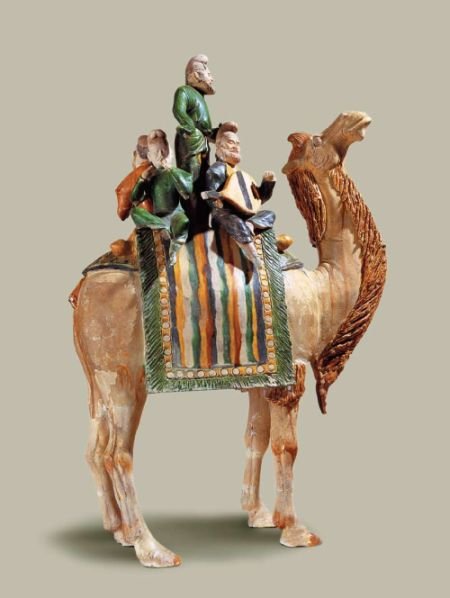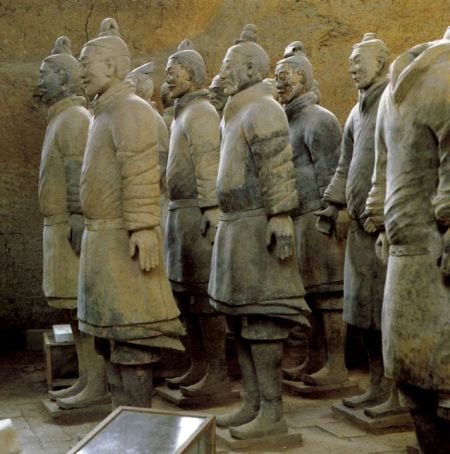
The period of the Qing Dynasty and the Han Dynasty was a period to establish and consolidated a centralized feudal monarch with multi nationalities united in China. The political system of centralization of the state power required the technologic production under a single command and a grand scale. A segment of a whole can be seen from the world-famous architectures and statues of the Qing Dynasty such as the Great Wall, the tomb of the First Emperor of the Qin Dynasty and his terracotta warriors and horses.
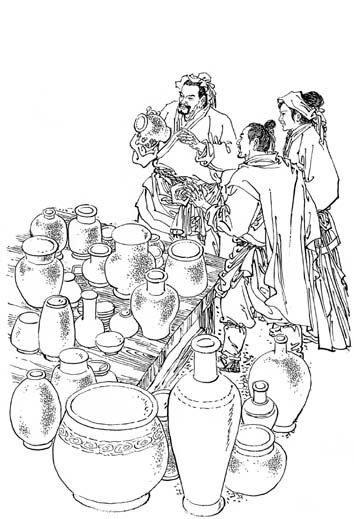
There were two kinds of operation for the arts and crafts in the period of the Qin Dynasty and the Han Dynasty: run by the government and by self-employed artisans. The former was mainly to meet the demands of imperial household and the nobility, the yamen (government office in feudal China) at all levels and the army. So the scale was grand, the trades were numerous, the division of labor was elaborate, the management was perfect, and the funds were abundant. As for the latter, the natural economy of the self-supporting and self-sufficient agricultural society was its important content, i.e. men tilling the farm and women weaving.
The government-run handicrafts of the Qin Dynasty included mining, smelting and casting, arms and weapons, carriages and chariots, tools and implements, lacquer ware and earthenware. The government, from the central to the local, set up large-scale handicraft administrations. During the Qin and Han period, iron-smelting industry had a great development. With the emergence of the technology of well-tempered steel forged for several times, the quality of ironware like weapons and farm tools was improved and social production promoted. In the early stage of the Qin Dynasty, ministerial government was honest and upright, the people were simple and honest, and arts and crafts laid stress on practical use with simple and unadorned shapes. As the rule of the Qin Dynasty lasted for only fifteen years, not too many handicraft articles have been handed down and what was left is mainly bronze ware, lacquer work and earthenware.