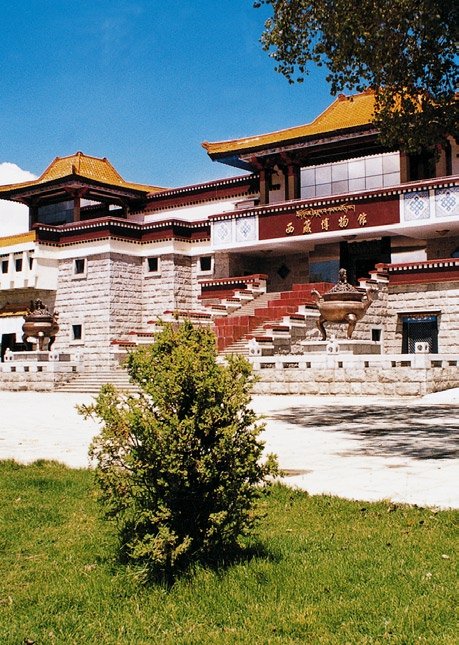
Address: Tibet, Lhasa City, Southeast of Norbulingka
The Tibet Museum was officially inaugurated in October of 1999, with a permanent collection that celebrates the History of Tibetan Culture. The design of the exhibit uses traditional Tibetan architecture such as Tibetan doors, beam-decoration,patterns and so on, in order to create the atmosphere of authentic Tibetan art.
The History of Tibetan Culture Exhibition incorporates superb examples of several thousand years of Tibetan history, politics, religion, cultural arts, and customs. It ‘takes Tibetan history as the main thread and Tibetan culture as the center’in exhibiting the long history of the Tibetan people and their vast and deep culture. At the same time most of the historical objects also express the fact that Tibet is an inalienable part of Chinese territory.
This exhibit displays around 1,000 precious objects, in a space totaling around 3,000 square meters and with an exhibition line of around 600 meters. The contents are divided into pre-history culture, indivisible history, culture and arts, and people’s customs.
Prehistory
This covers a period that stretches back fifty thousand years to three thousand years before the present. The Karuo
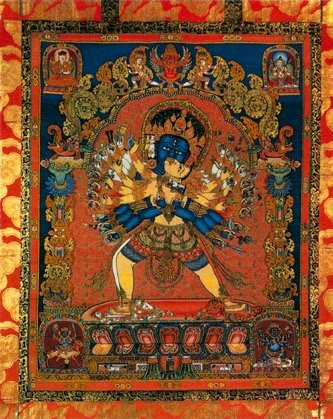
and Qugong sites are representative of the Neolithic in Tibet. With a large number of characteristic stone tools, pottery, bone objects and metal objects, this exhibition expresses the life of the ancient people of the Tibetan plateau. It also shows the cultural origins of the precursors of the Tibetan people, and their connections with the central plains civilization and Indus River civilization.
Indivisable History
This section includes material on different dynastic periods of Tibetan history, including Tibetan regional powers. Its main section revolves around the relationship between the Chinese central government and the Tibetan regional powers and discusses friendly relations between Han and Zang or Tibetan people. A large number of historically valuable objects are displayed as well as cultural relics that have political significance. These include seals, books, official documents, and so on, that clearly indicate the cordial relations that Han and Tibetan people have long enjoyed and the bonds of friendship due to the effective governance of Tibet by successive dynasties in China. It proves that Tibet has been an inalienable part of China since the Yuan dynasty.