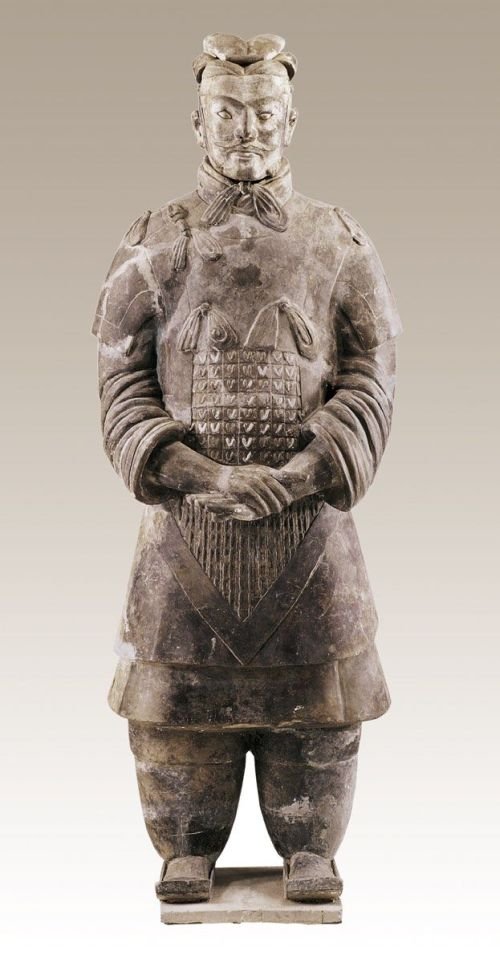
 China is a world-renowned ancient country of ceramic, which has long been one of the most significant traditional handicrafts in China. As early as the early Neolithic Age 8,000 years ago, earthenware was already made and used. During the mid-Shang Dynasty, porcelain in its rudimentary form started to appear. In terms of crafts, pottery and porcelain are both silicate products made atdifferent stage of development, porcelain being derived from pottery. They differ in raw materials, firing temperature and physical properties. Pottery was not pase out when porcelain invented, but continued to develop on its own course parallel to that of porcelain.
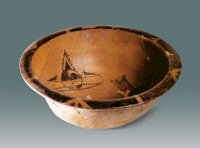
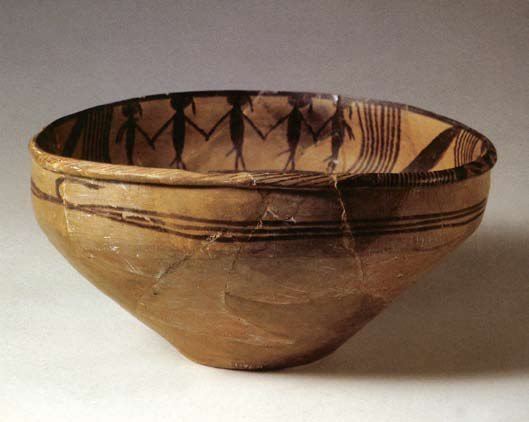
During the late Neolithic Age, painted pottery emerged as an outstanding variety of handiwork. And the then Neolithic Culture was called Painted Pottery Culture, also known as Yangshao Culture, named after Yangshao Village, Mianchi County, Henan Province where relics abound in pottery painted with colorful patterns were first found. Painted pottery is a kind of earthenware in reddish brown or pale brown with red or black decorative patterns elegant in shape and exquisite in design. Painted pottery was distributed over a vast area, including the Yangshao Culture region in the upper and middle reaches of the Yello Rver, the Dawenkou Culture region in the middle and lower reaches of the Yellow River (dating back to 4,500-6,400 years ago), and the Hemudu Culture region in the middle and lower reaches of the Yangtze River, of which Yangshao Culture was the most flourishing. Painted pottery was superior in ornamentation. As people at that time used to place utensils on the ground, the ornamental patterns tended to take an upper position while taking into consideration at the same time the vertical view and the side view so as to embody an integral effect.